Megadeth’in kurucusu, thrash metalin efsane ismi Dave Mustaine ile İstanbul konserinin hemen öncesinde bir araya geldik! Mustaine ile Megadeth'in 40 yıllık köklü tarihinden sahne disiplinine, dövüş sanatlarının hayatındaki rolünden kanserle olan mücadelesine ve "Viking Eli" rahatsızlığına kadar, hayatın ta kendisini konuşuyoruz. Mustaine Türkiye'deki metal müzik hayranlarıyla kurduğu özel bağı, sahne arkasındaki "saha komutanlığını" ve gelecek planlarını da anlatıyor.
İlksen Mavituna: Apaçık Radyo'nun YouTube kanalına hoş geldiniz. Sayın Mustaine, konserinizin olduğu gün burada, bizimle olduğunuz için teşekkürler. Zaman ayırdığınız için teşekkür ederim. Röportajlarda genelde doğaçlama yapmaya çalışırım ama çocukluğumdan beri dinlediğim bir efsaneyle karşılaşınca... İzninizle sorularımı okuyacağım. Bu röportajı 40 yılın bir özeti gibi hayal ettim ve geçmişe dönük bir soruyla başlamak istiyorum. Kırk yılı aşkın süredir turneye çıkıyor, kayıt yapıyor ve Megadeth'e liderlik ediyorsunuz. Sabahları uyandığınızda sizi hala ne heyecanlandırıyor?
Dave Mustaine: Hayat. Gerçekten bir uyarıcıya ihtiyacım yok. Şu an hayatımda bulunduğum noktadan çok mutluyum. Ailemle harika bir ilişkim var. Bu elbette çok önemli. Özellikle evden bu kadar uzak kaldığınızda, herkesin bir arada yaşayabilmesi için çok güçlü bir aile yapısına ihtiyacınız oluyor, özellikle işin içinde çocuklar varsa. Karım ve çocuklarım için Tanrı'ya şükrediyorum. Müzik yapma işim benim için hiç bu kadar keyifli olmamıştı çünkü Dirk, Teemu ve James ile çalmak gerçekten çok kolay. Gerçekten kolay. Geçmişte harika anlar yaşadığımız zamanlar oldu ama bu kadronun bir arada geçirdiği süre boyunca... Neredeyse her günümüz harika geçiyor. Grup sürekli birlikte takılıyor, eskiden herkes kendi yoluna giderdi. Bundan nefret ederdim çünkü yollarda olmak yalnız hissettiren bir şey. Tek başınayken birçok belaya bulaşabilirsiniz. Şu anki durumu seviyorum. Hayranların bu yeni plağı karşılama biçimini ve birbirimize duyduğumuz saygıyı seviyorum. Çoğu zaman bir yerlere gidiyorum ve durup fotoğraf çektiremiyor veya imza dağıtamıyorum ama bunu olabildiğince yapmaya çalışıyorum. Bazen sadece bir binadan çıkıp araca biniyorum, içeri girdikten sonra benimle seyahat edenler oradaki hayranlardan imza alacakları şeyleri toplayıp arabada bana getiriyorlar, biz de imzalıyoruz ve iş bitiyor! Çünkü dışarıda durursam bu 2 dakika, 5 dakika, 10 dakika sürecek ve bugün olduğu gibi geç kalacağım. Buraya gelirken de kendi kendime "Bunu yapmayı bırakmalıyım" diyordum. Geç kalmaktan nefret ederim. Hiçbir zaman geç kalmazdım. Zamanında orada olmamanın gerçekten kötü bir alışkanlık olduğunu düşünüyorum çünkü sizin zamanınız değerli. Benimki de öyle. Buna saygı duyduğumdan emin olmak istiyorum.
İ. M: Evet ama tahmin edebileceğim üzere çok sıkı bir programınız var.
D. M: Kimin umurunda? Zamanında orada olabilirim.
İ. M: Haklısınız.
D. M: Yeyy! Sanırım istemediniz siz, lütfen, siz istemediniz mi?
İ. M: Ben içtim. Teşekkürler.
D. M: Türk kahvesi içme fırsatı çok nadir buluyoruz. Amerika'da içtiğimiz yerler var ama doğru düzgün yapamıyorlar, berbat oluyor.
İ. M: Ama İstanbul'dayken bunu içersiniz.
D. M: İstanbul'dayken... Bir süredir bu otelde kalıyoruz. Nerede kaldığımız herkesçe duyulduğu için yeni bir yer bulmamız gerekecek. Ama buradaki insanları sevdim. Ve yemekleri; sokakta yürürken küçük bir restoran bulup muazzam bir yemek yiyebilirsiniz. Çok pahalı bir restorana gitmenize gerek yok çünkü o zaman kültürü kaçırıyorsunuz. Buraya turneye çıkmadan çok uzun zaman önce Türkiye'ye gelmiştim. Karımla geldim ve burada tatil yaptık. Gidip adaların çoğunu gördük. Türkiye'nin tarihine duyduğum sevgi nedeniyle buraya çalmaya gelmek benim için olağanüstüydü. İlk çaldığımız zamanı hatırlıyorum, tepede olan korkunç bir yerde çalmıştık. Hatırlıyor musunuz bilmiyorum.
İ. M: Orada değildim ama evet.
D. M: Neyse... İnsanların müzikten keyif alması için zor bir yerdi çünkü tepe çok dikti, bu yüzden insanlar ayakta duramıyordu. Bir tepenin yamacında yorulmadan uzun süre ayakta duramazsınız. Sizi yorar; oturmak ya da dik durabilmek istersiniz.
İ. M: Geçen yılki şovunuzu hatırlıyorum. Tıklım tıklımdı ve Türkiye'deki insanlar Megadeth'e tapıyor. Geçen hafta okuduğum bir ankete göre bu thrash devleri arasında Megadeth açık ara birinci, en popüler olanı. Bunun bir nedeni olmalı ama bilmiyorum.
D. M: Neden daha popüleriz?
İ. M: Yani Türkiye'deki metalcilerin favorisi olarak. Sanırım onlarla aranızda özel bir bağ var.
D. M: Bence bunun nedeni hayranlarımızdan farklı olduğumu hissetmemem. Beni görüyorsunuz, kot pantolonlayım, Dave bu. İnsanlar bana övgü dolu şeyler söylediğinde bazen utanmıyorum ama biri iltifat ettiğinde bazen mahcup hissediyorum çünkü insanların düşündüğü gibi harika biri olmadığımı biliyorum. Bütün sırları biliyorum. Yaptığım bütün yanlışları biliyorum. Gitar çalmak evet, gitar çalmak eğlenceli, benim için heyecan verici ama sadece bir gitarist olmam beni başkasından daha iyi yapmaz. Gitar çalmada başka birinden daha iyi olabilirim ama başka birinden daha iyi bir insan değilim.
İ. M: Ama sanırım bu grubu 40 yıl boyunca devam ettirecek iyi bir disiplininiz var. Mümkünse dövüş sanatlarıyla olan ilişkinizden ve...
D. M: Ne ile ilişki?
İ. M: Dövüş sanatları, karate falan.
D. M: Tabii.
İ. M: Disiplin açısından profesyonel kariyerinizde dövüş sanatlarının nasıl bir rolü oldu? Sadece yetenek değil, biraz da bu...
D. M: Dövüş sanatlarının bana yardımcı olduğu çok şey var. Sanırım söyleyeceğim ilk şey denge. Bedenimi sadece fiziksel olarak içeriden değil, sahneye çıktığımda metafiziksel olarak da dengeye oturtmanın benim için önemli olduğunu düşünüyorum. Sahnenin kenarındayken dengemi kaybetmek istemem. Bu çok kötü olurdu. Ayrıca çevremin farkında olmayı da öğrendim. James gruba katıldığında sahnede bir uçtan bir uca koştuğu çok zamanlar oldu ve koşarken adımları çok ağırdır. Sahnede güm, güm, güm diye sesler yankılanır. Kendi kendime "Kahretsin, sahnede biri var" diye düşünürüm. Pantera ile olan onca şeyden sonra, aklınızın bir köşesinde hep bir şeyler kalıyor. Aklınıza gelmezse aptallık etmiş olursunuz. O yüzden hatırlamam gerekiyor, o gelen James mi, yoksa sahnede koşan 140 kiloluk bir adam mı?
İ. M: Yani dövüş sanatlarıyla olan ilişkiniz daha çok denge üzerine.
D. M: Her şeyde o dengeyi bulmakla ilgili.
İ. M: Evet.
D. M: Yemek yemede bile dengeye ihtiyacınız var. Bence pek çok insan kan gruplarına ve vücut tiplerine uygun beslenselerdi şu anki kadar hasta olmazlardı, özellikle de Amerika'da. Amerika Birleşik Devletleri'nde diğer pek çok ülkeden gerçekten farklı yeme alışkanlıkları var. Amerika'ya gittiğinizde kalorilerle dolu çok büyük porsiyonlar ve büyük içecekler alıyorsunuz. Buradayken, Avrupa'ya her geldiğimizde herkes daha sağlıklı oluyor. Ailemin bir şarap işi var, İtalya'da bir mülkümüz var. Pam ve Electra yaklaşık bir aylığına oradaydılar ve oradaki yerimize her gittiklerinde bronzlaşmış, zayıflamış ve sağlıklı dönüyorlar. Bu kez köpeklerimizi de oraya götürdüler. Evet, her şey dengeyi bulmakla ilgili. Bir hayvan sahibi olduğunuzda ve o kadar uzun süre uzaklaştıklarında ritminiz bozuluyor, dengeniz bozuluyor. Sorumluluk gerektiren bir evcil hayvanınız olduğunda yüzde yüz kendiniz olamıyorsunuz; bir çocuk gibi değil ama yine de bakmanız gereken canlı bir varlık. Siz buradaysanız ve hayvanlarınız oradaysa o denge bozuluyor. Zoom'a şükürler olsun, insanların eve bağlanmasını kolaylaştırıyor. Telefon ve televizyon aracılığıyla eve bağlanabileceğim bir cihaza ilk sahip olduğum zamanı hatırlıyorum, 30 yıldan fazla zaman önceydi. Teknoloji değişti. Bunu yapmak artık çok kolay ama sevdiğiniz birinin fiziksel dokunuşunun yerini tutmuyor.
İ. M: Elbette. Peki İtalya'da ne zamandır çalışıyorsunuz? İtalya ile bağınız nedir? Ne zaman başladı? Eski bir iş mi?
D. M: Aldığımız mülk şarabımıza, araziye, toprağa, havaya, okyanus havasına dayanıyordu. Çok küçük bir kasaba. Çoğu insan adını bile duymamıştır. Ben duymamıştım, siz de duymamışsınızdır. Güzel bir yer bulduk, bağlarımızı ektik. Dünyanın başka yerlerinden de şarap alıyoruz; daha doğrusu üzüm suyu alıp sonra onu şaraba dönüştürüyoruz. Bunu şaraplarıyla ünlü Kaliforniya'dan yapıyoruz. Fakat Kaliforniya şarabında sülfat var, bu da bazı insanlarda çok fazla baş ağrısına neden oluyor. O yüzden şahsen Kaliforniya şarabı içmiyorum ama Napa Vadisi'nden ve Batı Yakası'ndaki Sedona gibi diğer bazı yerlerden gelen şarapları seven pek çok insan var. İtalya'daki o yeri aldık çünkü İtalya ve Fransa'da meyveler muhteşem.
İ. M: Öyle, sonuçta Akdeniz.
D. M: Evet. Bu konuda asıl şanslı olan sizlersiniz.
İ. M: Ben de güney şaraplarını çok severim. Türkiye'nin güneyinden gelen şaraplar harikadır.
D. M: Türkiye'nin güneyinden mi? Gerçekten mi?
İ. M: Evet.
D. M: Hangisi?
İ. M: Ben bir Ege şehri olan Denizli şarabını tercih ediyorum.
D. M: Bitirdiğimizde benim için adını yazar mısınız?
İ. M: Tabii ki yazarım. Geri dönelim. Dövüş sanatlarından falan bahsettik, şimdi de şarap hakkında konuşuyoruz. Hayatın gerçek yüzü üzerine sizinle sohbet etmek çok güzel bir şey çünkü dediğiniz gibi kot pantolonunuzu giyiyorsunuz ve bu akşam sizi devasa bir sahnede göreceğim. Çok heyecanlıyım. Notlarıma dönüyorum, kusura bakmayın.
D. M: Bu durum tıpkı Amerika'da Amerikan futbolu oynayan bir adamı görmenize benziyor, değil mi? Cüsse olarak iri olabilir ama maç vakti geldiğinde, evet, o artık devasadır. Eskiden ligde kaskınızı çıkaramayacağınız bir kural ve cezası vardı. Bunun nedeni de tüm oyuncuların tanınmasını istememeleri, hepsinin eşit olmasını istemeleriydi.
İ. M: Tamam.
D. M: Ve NFL'deki hiç kimse bu kurala saygı duymuyor. Yani hiç kimse demeyelim ama NFL'deki birçok kişi bu kuralı hiçe sayıyor ve kasklarını hemen çıkarıyorlar. Bunu neden yapıyorlar? Tıklanma, reklam, sponsorluk falan alabilmek için. Futbol futboldur. Sadece bir tane iyi hareket yapıp kaskınızı çıkarmamalı, her maçta bir sürü iyi hareket yapmalısınız. Müzik endüstrisi de böyledir. Bir konser sizi süperstar yapmaz. Birçok muhteşem performans sergilemeniz ve seyirciyi nasıl yöneteceğinizi bilmeniz gerekir. Canlı çalarken her şarkıdan sonra seyirciler coşkuyla tezahürat yapıyorsa, konuşmama gerek yoktur. Hiçbir şey söylememe gerek yok. Sadece çalmaya devam ederim. Eğer çalarken bir şarkıyı bitirdiğimizde tezahüratlar fena değilse ama ardından bir sessizlik oluyorsa, bu orada çok sayıda yeni hayran olduğu veya kötü bir şov çıkardığımız anlamına gelir. Her halükarda, o performansın ritmini -grup ve seyirci dengesini- eşitleyecek şekilde değiştirmem gerekir ki, seyirci de orada olmaktan bizim kadar heyecan duysun ve bizim kadar enerjik olsun. Bu da sahada iyi bir general olabilmekten geçiyor. Gidip savaş alanını tespit edersiniz ve "Tamam, şuradaki güvenlik birine sert davranıyor" dersiniz. Konser sırasında monitör görevlimizin yanına gidip "Şu güvenlik görevlisini buradan çıkarın" derim. Yüzümü gizlemem ama sessiz olduğu bir anda kulağına konuşurum. O da "Hangi adam?" der. Mikrofonuma dönerim, şarkı söylerim ve adamlarımızdan biri pitin içinden geçerek her güvenlik görevlisinin yanından yürür. Doğru adama geldiğinde -çünkü orada sayısız güvenlik görevlisi vardır- kafamla işaret ederim ve şarkı söylemeye devam ederim, kimse hiçbir şey anlamaz. Sonra patronu gelip onu dışarı çıkarır. Kimsenin hayranlarımıza şiddet uygulamasına gerek yok. Elbette Endonezya'da verdiğimiz bir konser vardı, güvenliği ordu sağlamıştı ve insanların yüzüne tüfek dipçikleriyle vuruyorlardı, çılgına dönmüştüm. Ama orduya ne diyecektim ki? "Teşekkür ederim, önümüzdeki 20 yıl boyunca hücremde olacağım" mı?
İ. M: Bu ne zamandı?
D. M: Endonezya'ya ilk gittiğimiz zaman. Uzun zaman önceydi, belki 20 yıl olmuştur. Bilmiyorum. Endonezya'ya ilk ne zaman gittiğimizi oradaki araştırmacılarımıza sorabiliriz. Belki röportajın sonuna doğru öğreniriz.
İ. M: Yani sahnede seyirciyle ne olup bittiğinin ve sahne dışında olan bitenin tamamen farkındasınız, sahip olmanız gereken sağlam bir konsantrasyon, çünkü yanlış anlamadıysam bazen çalma listesini yeniden formüle ediyorsunuz...
D. M: Set listemizi mi?
İ. M: Evet, dinleyicinin nabzına göre.
D. M: Bunu duyduğunuzu mu söylediniz?
İ. M: Hayır, bunu yapıyor musunuz? Doğaçlama değişiklikler yapıyor musunuz?
D. M: Hayır, set listesindeki doğaçlama değişiklikleri sahneye çıkmadan önce yapıyoruz.
İ. M: Anlıyorum.
D. M: Çünkü çok araştırma yapıyoruz. Bir bardak su almam mümkün mü Kurt? Bu kahve henüz tam olarak çökmemiş, ağzıma telve geldi. Yaptığımız şey şu ki, bu gerçekten harika bir şey, bunu yapan başka bir sanatçı var mı bilmiyorum. Onlar... Başka hiçbir sanatçıyı bilmiyorum. Yani, belki umursuyorlardır.
İ. M: Evet.
D. M: Ekrandan çıkmasını beklememi ister misiniz? Teşekkürler.
İ. M: Bazen konserin ritmini değiştirmeye karar verdiğinizi söylediğinizde, aklıma bu gelmişti.
D. M: Tabi. Ama bu, insanlarla etkileşime geçmekle alakalı. Sahnede sesli bir çağrı yapıp "Şu şarkıyı buraya ekleyelim" deseydim, bu grubun ve ekibin ritmini etkilerdi çünkü her şey bilgisayarla yapılıyor ve ışıklar müziğe eşlik ediyor. O yüzden listede olmayan bir şarkıyı araya koymak için durmamız gerekirdi. Ve inanın, 30 saniye sahnede sonsuzluk gibi gelir. Orada kastettiğim şey, izleyiciyle özdeşleşmeye çalışmaktı. Genelde "Kaç kişi ilk defa burada?" diye sorarım. Sonra "Tamam, tüm yeni hayranlarımıza hoş geldiniz diyelim" derim çünkü kim Megadeth ailesinin sahip olduğu o yoldaşlık hissini hissetmek istemez ki? Bu grubun sahip olduğu bir şey bu. Megadeth hayranları birbirine tamamen zıt iki ülkeden olabilirler ama Megadeth sayesinde bunu bir kenara bırakırlar.
İ. M: Evet.
D. M: Ki bu benim için harika bir şey. Şimdi, set listesi kararlarına dönersek, bunu önceden yapıyoruz ve burada son çaldığımız zamana bakıyoruz. Set listesiyle ne yaptığımı size söyleyeyim: Bu sabahki gösterinin set listesini hazırladım. Ve elimde burada son çaldığımız seferin listesi vardı. Bunu neden mi yaptım?
İ. M: Küçük ayarlamalar yapmak için.
D. M: Elbette, ama yeni şarkılar çalabilmemiz için tekrar tekrar çaldığım şarkıları görmek istedim. 200'den fazla şarkımız var, bu yüzden çalmamız gereken standart şarkılar var Peace Sells, Holy Wars ve ardından yeni albüm çıktığında yeni şarkılar: Tipping Point, Let There Be Shred— ve ondan sonrakilerin çoğu ise hissiyata göre eklediğimiz şarkılardır. Elimizde son gittiğimiz yerdeki şov var, bir de dün gece çaldığımız şov var. Yaptığımız son şov... lanet olsun, son şovumuzu hatırlamıyorum bile. Neresiydi? Bir yerde bir festivaldi. Yaptığımız son şov neydi? Hellfest. Kusura bakmayın, Hellfest. Gittiğimiz son festival oydu ve orada 90 dakikalık bir set çaldık. Seti gerçekten agresif tuttuk çünkü Hellfest'e giden gerçekten agresif bir kitle var. Daha önce birkaç festivalde çaldığımızda, Rock the People adında bir festivaldeydik ve oradaki tek metal gruplarından biriydik. Bu yüzden The Conjuring'i çalmadık; en hızlı, en sert şarkılarımızın olduğu bir set yapmadık. Melodik müziklerimizin çoğunu çaldık çünkü orada Megadeth'i bırakın, hayatında hiç thrash metal duymamış insanların olduğunu biliyorduk. Müziğimizi daha önce hiç duymamış insanlara çaldığımızda, duyup beğenmeleri konusunda oldukça iyi bir başarı oranımız var. Sorun şu ki, çoğu metal grubu gibi bizim de büyük kalabalıklara çalma fırsatımız sınırlı. Liyakate dayalı popüler olan bir grup olduğunuzda arada büyük bir fark oluyor. Mesela Joey Ramone'un yanına gittim ve dedim ki, "Birinin 'Metallica, The Ramones için neyse, Megadeth de The Clash için odur' dediğini duydum." Joey de "S...r et Metallica'yı" dedi. Bunu söylemesini beklemiyordum çünkü hepimizin ne kadar büyük hayranları olduğunu bildiğine emindim. Ancak birinin böyle şeyler hakkında ne düşündüğünü asla bilemezsiniz. Ve bu onun müziği sevmediği bir durumdu. Ben bir Ramones hayranı değilim, o yüzden anlıyorum. Müziklerini takdir ediyorum ama bir Ramones plağım yok.
İ. M: Peki ya The Clash?
D. M: The Clash mi? The Clash'i severim. Bence harikalar. Stand By Me gibi bence biraz fazla pop olan pek çok şarkıları var. Ama London Calling bir noktada cover yapmayı düşündüğümüz bir şarkıydı. Eğer yapsaydık harika bir cover şarkısı olacağını biliyorum çünkü bizim yapış tarzımızdan çok farklı. Bunu yapabilmemizin tek yolu şarkıyı en düşük ortak paydasına kadar indirgemek ve oradan devam etmek olurdu, çünkü onların enstrüman seçimleri için kullandıkları şeyleri biz farklı enstrümanlarla kullanırdık. Dolayısıyla tını hemen farklılaşırdı ve tını farklı olduğu için ritmin değişmesi gerekirdi, zira biraz pop tarzında. London Calling'i düşündüğümde kafamda bir çatışma yaşıyorum ve UFO'nun Londra'daki zorlukları anlatan muhteşem şarkısı Lights Out aklıma geliyor. Özellikle 2. Dünya Savaşı ve Londra'nın bombalanmasıyla ilgili olduğunu düşünüyorum; şarkının bununla ilgili olduğundan oldukça eminim. Bu yüzden UFO'yu çok severim, en sevdiğim gruplardan biridir.
İ. M: Evet, UFO.
D. M: Evet. Gitar solo tarzımdan UFO'dan etkilendiğimi anlayabilirsiniz bence.
İ. M: Peki sizi etkileyen başka hangi isimleri sayabilirsiniz?
D. M: Etkilendiğim mi? Michael Schenker'ın çalış tarzını seviyorum ve UFO'ya büyük saygı duyuyordum ama esasen Michael'dı. Phenomenon plağını aldım ve o kaydı daha bir gençken yaptığını duydum. 15, 16 ya da 17 yaşlarındaydı. Bu aklımı başımdan aldı çünkü besteleri ve klasik müzik etkilenimleri dikkate değerdi. Sürekli şöyle düşünüyordum: "Bu zavallı çocuk muhtemelen piyanonun başında tıngırdatıyordu çünkü ailesi 'Oraya geç Michael, klasik parçalarını çal' diyordu, o ise 'Canınız cehenneme, benim gitarım var' diyordu." Ve bu harika soloları atmaya başlıyor. Eddie Van Halen'a karşı bakış açım da biraz buydu çünkü ailesi onun enstrüman çalmasını istiyordu ve o klasik müziğe yöneldi. Klasik müzikten etkilenen insanların enstrümanları üzerinde inanılmaz bir kontrole sahip olduklarını görebilirsiniz, normal insanların yapamayacağı sesleri çıkarıp duyguları ifade edebiliyorlar. Birçok metal grubu duyuyorsunuz, hepsi aynı türden şeyler. Bana göre bu bir şarkıyı mahvetmenin en hızlı yolu. Belki gerçekten hızlı bir davul ritmi, gerçekten hızlı bir gitar partisyonu olan bir şarkınız var, sonra solo giriyor ve solo bütün şarkı adına konuşacak. Eğer düşünülmeden yapılmış bir soloysa, o zaman bütün şarkı hızlı ve düşüncesiz bir şarkı gibi duyulur. Eğer şarkı için mükemmel bir soloysa Black Friday'deki solo gibi hızlı davul ritmi ve hızlı gitar partisyonu kulağa gayet normal gelir.
İ. M: Anlıyorum. Dediğiniz gibi mantıksız bir gitar solosu.
D. M: Evet, onlardan çok var. Benim de yaptığım birkaç solo oldu öyle...
İ. M: Ama bu "shredding" değil, shredding'den başka bir şey, değil mi?
D. M: Oh, bu shredding değil, sadece ne yaptığını bilmemek ve sırf gerçekten hızlı bir şeyler çalmak için aynı şeyi defalarca tekrar etmek. Hatırlıyorum da bir defasında Buenos Aires'e gitmiştim. Bir gece dışarı çıkmıştık; kulüplere ilk ve son çıkışlarımdan biriydi. Bir yere gittik ve ne olacağı hakkında hiçbir fikrim yoktu. Etrafım sarıldı. Oradaki gruplarla çalmam istendi ve insanlar bana sürekli içki getiriyordu. İnsanları kırmak istemediğim için sürekli "Bir yudum alıp koymak, bir yudum alıp koymak" döngüsünden bıkmıştım. "Sana içki vereyim mi?" "Tamam, teşekkürler." Bir baktım gitar çalıyorum, sarhoştum ve bu hiç hoşuma gitmedi.
İ. M: Evet.
D. M: Ve yetilerimin kontrolünü kaybettiğim bir durumda çalmayalı epey zaman olmuştu. Çünkü yıllar boyunca Megadeth'in en çılgın zamanlarında bile, gerçekten çalamayacak durumda olduğum anlar çok azdı. Herkesin bunun bir yetenek olduğunun farkına varması gerektiğini düşünüyorum. Eğer bir şeyde gerçekten iyiyseniz, bunu çantada keklik sanıp zil zurna sarhoş olmayın, bir kulübe gidip birinin elinize gitar tutuşturmasına izin vermeyin, çünkü sonu kötü bitebilir.
İ. M: Kesinlikle. Bu keyifli sohbet için size teşekkür ediyorum. Kapanış sorusu olarak, sizi ileride neler bekliyor?
D. M: Ne neler?
İ. M: Son turnenizde olduğuna göre ileride sizi neler bekliyor?
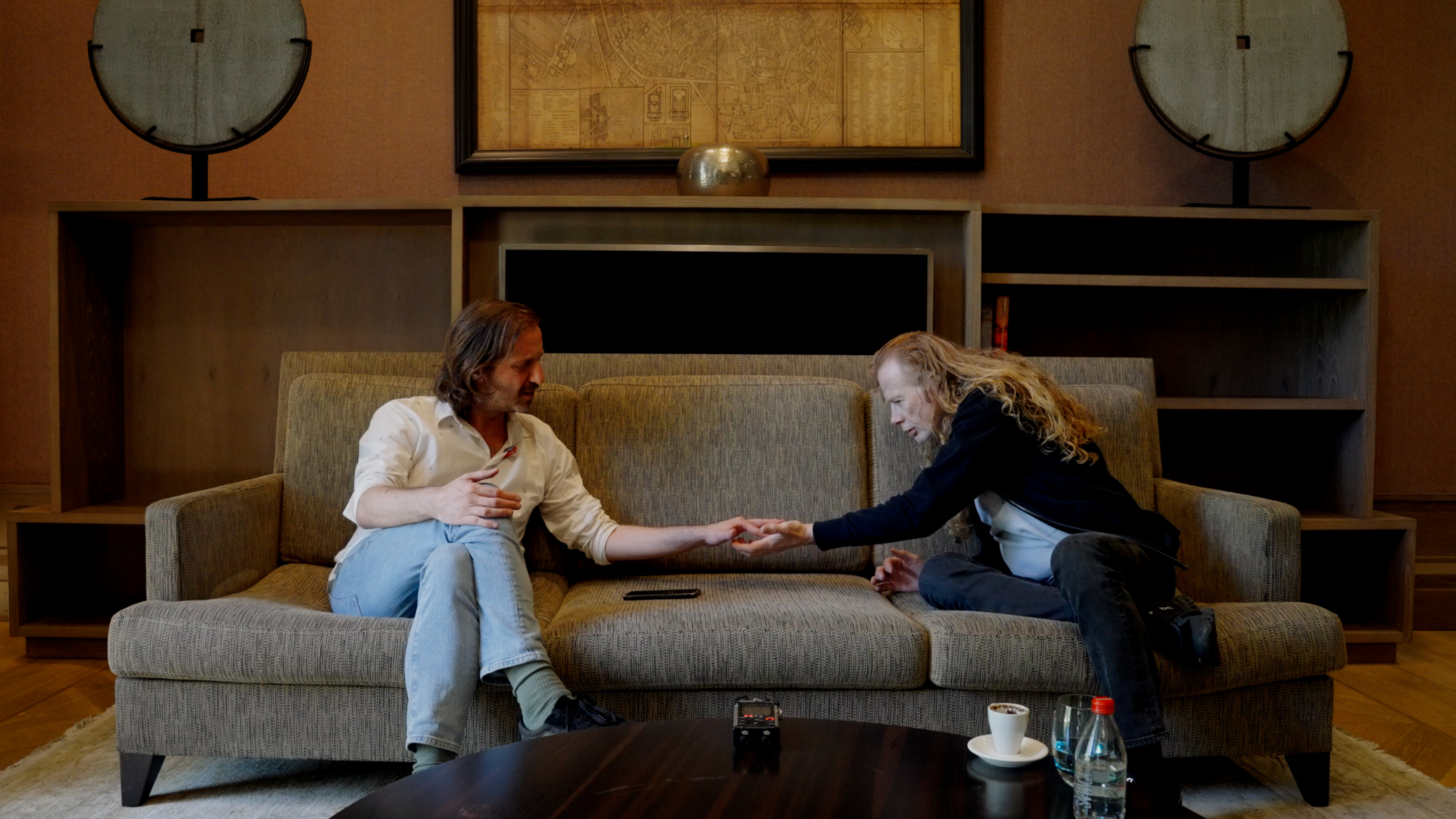
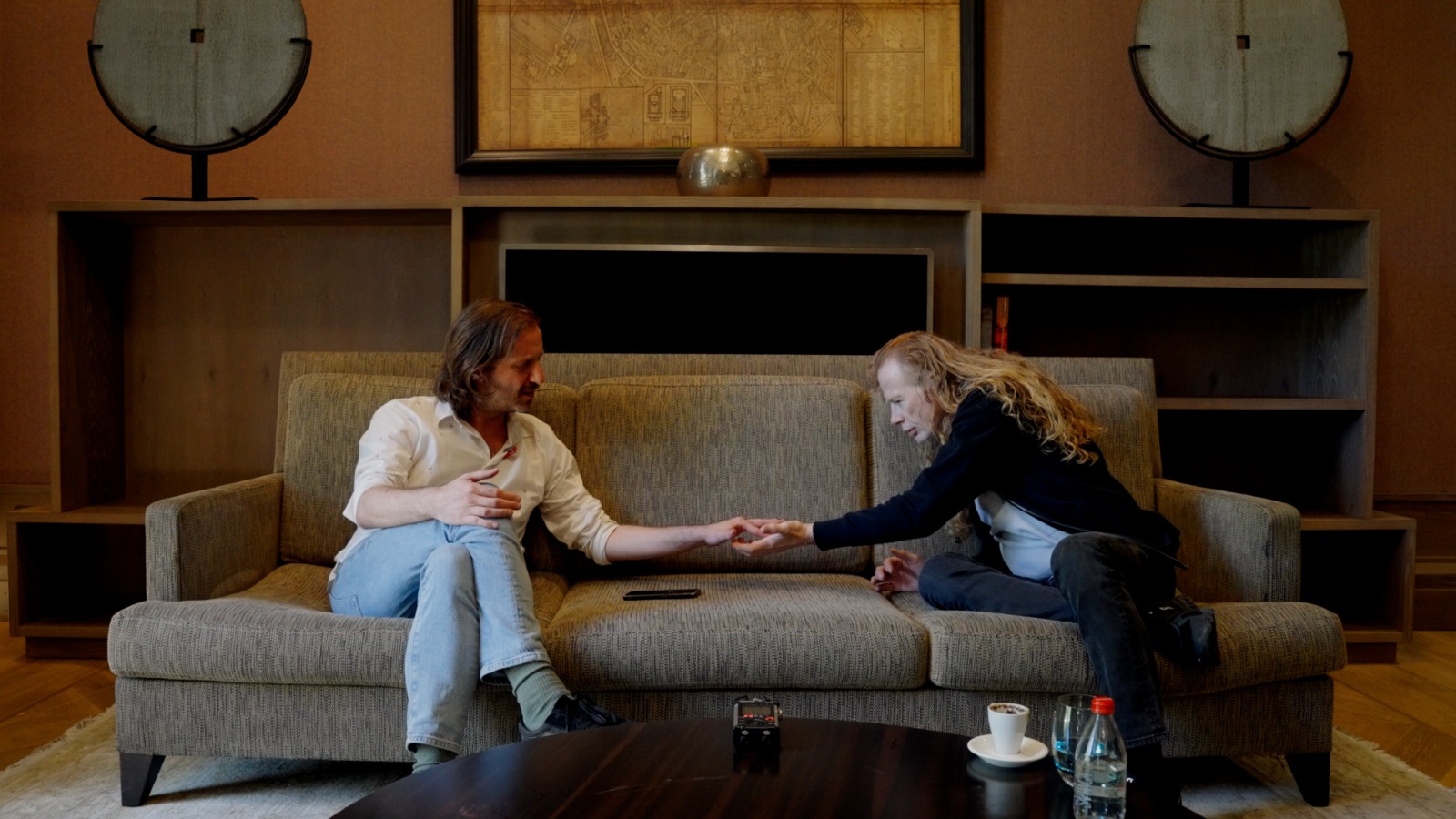
D. M: Aslında oldukça fazla şey var. Bu son kayda başlamadan önce planladığımız birçok şey vardı. Ayarlanmış 3 yıllık bir turnemiz vardı, yani tüm bu tarihler için sözleşmelerimiz var. Kaydın yarısına gelip gitar partisyonlarını yapmaya başladığımızda, Teemu Finlandiya'ya geri dönüyordu çünkü gelip birkaç hafta Tennessee'de kalıyor, sonra eve dönüyordu. O evdeyken ben ne yapıyorum? Bütün gün gitar çalıyorum. Geri geldiğinde ben gitar çalıyorum, o gitar çalıyor. O gittiğinde bütün zaman boyunca ben gitar çalıyorum. Yani aylarca her gün, bütün gün gitar çalıyorum. Şarkı yazıyoruz, partisyon yazıyoruz, bir şeyler kaydediyoruz, yeniden kaydediyoruz. Ve ellerim gerçekten çok ağrımaya başladı. Elimde şöyle bir şey var, tam şurada görebilirsiniz. Görüyor musunuz?
İ. M: Evet, hissediyorum. Hissedebiliyorum.
D. M: Sertçe bastırın. Evet. Hissettiniz mi?
İ. M: Evet. Bu... bu ekstra kemik, öyle mi?
D. M: Bu bir tendon. Ve bir sorunu var... bu yöne ve şu yöne doğru gidiyor, buna Viking eli deniyor. Yani eninde sonunda parmağımı böyle çekecek. Bunun bir tedavisi var ama yüzde yüz garanti değil. Ben de 3 yıl boyunca turneye çıkacağımızı, turnenin sonunda da elime bu şekilde devam etmek isteyip istemediğime ya da ameliyat olmak isteyip istemediğime karar vereceğimi düşündüm. Ameliyat olursam işe yarayacak mı, yaramayacak mı? Daha mı kötü olacak? Daha mı iyi olacak? Bir sürü "acaba" var.
İ. M: Haklısınız.
D. M: Bunun etrafında planladığımız pek çok şey vardı; grupla ilgili şeyler, çalmak, grup ve hayran kitlemizle eğlenceli etkinlikler, bir sürü film çalışması, gerçekten harika bir sürü şey. Önümüzdeki ay yapacağımız öylesine devasa bir duyurumuz var ki. Kelimenin tam anlamıyla bu dünyanın dışında bir şey. Sadece... Size orada bir ipucu verdim. Tamam, inanılmaz bir şey olacak.
İ. M: Bir ay daha var.
D. M: Evet. Şu sıralar bu tarz şeylerle uğraşıyoruz. Üzerinde çalışmaya başladığımız bir başka MegaCruise organizasyonu var. Bunu duyuracağız, "Peace Sells" gezisi. Hastalandığım ve gidemediğim geçen seferkinden farklı olacak. Bunda ben de olacağım. O zaman benim için gerçekten büyük bir üzüntüydü çünkü tüm grupları ayarlamıştık, herkes biletini almıştı, herkes gitmeye hazırdı ve ben çok hastalandım. Kansere yakalandığıma dair belirtilerin başlangıcıydı. Bu yüzden evde kalmak zorunda kaldım. Sanırım 2019'dan beri kanser konusunda remisyondayım. Sanırım 19 Ekim'di, nedense şu an aklıma o tarih geliyor. Teşhis konulduğu günle mi yoksa iyileşme sürecine girdiğim günle mi karıştırıyorum bilmiyorum ama iyileşme sürecindeyim ve bu durumdan çok mutluyum. Bunun için çok çabalıyorum. Bazen baş belası olabiliyor. Aldığım radyasyon ve kemoterapi çenemin etrafında olduğu için yan etkilerle başa çıkmak bazen gerçekten çok zor oluyor. Bu yüzden tüm dişlerim hasar gördü ve dişlerimi korumak için büyük çaba sarf etmem gerekiyor. Turnede bir dişim kırıldı, önden bir dişim kırıldı. Geçen turnede şuradan bir dişim kırıldı. Sonra da arkadan bir dişim tamamen koptu. Onları sürekli yerine taktırmak zorunda kalıyorum, mesele bu. Normal dişler düştüğünde, yeterince diş kaldıysa geri takabilirsiniz ama implantlar bir sonraki adımdır ve radyasyonun yan etkileri implant yaptırmamı gerektirdi. Ama biliyor musunuz, hala konuşabiliyorum ve hala şarkı söyleyebiliyorum, dil kanserine yakalanan pek çok insan konuşamıyor bile. O yüzden bunun için Tanrı'ya şükrediyorum. Doktorlarıma ve aileme teşekkür ediyorum. Ben bütün o kanser tedavisi sürecinden geçerken "The Sick, the Dying... and the Dead!" albümünü yaptık. Bir de kanser yolculuğumu anlatan "In My Darkest Hour" adında bir kitabımız çıkıyor.
İ. M: Evet.
D. M: Ve bu çok duygusaldı. Kitabı baştan sona okudum ve katılmalarını rica ettiğim insanların, her şeye tanık olanların, bu süreci atlatmama yardım edenlerin neler söylediğini gördüm. Gerçekten kahredici günler olmuştu. Gerçekten çok çirkin anlar vardı. Çok kötü bir iş çıkarmadım ama birkaç gerçekten kötü gün oldu. Bunları atlattığım için sadece minnettarım.
İ. M: Evet. Bunu bir iyileşme süreci olarak mı yoksa bir yeniden doğuş olarak mı görüyorsunuz?
D. M: Ne olarak?
İ. M: Az önce anlattıklarınız bir iyileşme süreci gibi ama aynı zamanda... pek çok kez kendinizi yeniden yaratmak zorunda kaldınız. Yani yaşam boyunca, bütün bu 40 yıl boyunca. Organizasyonel çatışmalar gibi pek çok büyük olay yaşandı.
D. M: Yeniden kalibre etmek.
İ. M: Yeniden kalibre etmek, evet. Ben sizi her zaman kendini ve müziğini tekrar tekrar baştan yaratan biri olarak görüyorum. Kanserle olan savaşınızla da benzer bir durum bence, değil mi?
D. M: Kanser herkes için farklıdır. Şüphesiz öğrendiğim tek şey bu. Çünkü pek çok insan kanser tedavisini etrafındakilere karşı bir silah olarak kullanıyor. Tedavim sonrasında almam gereken ilaçlar konusunda bana yardımcı olan bir personelimle seyahat ediyorum ve güvenlik kontrolünden her geçişimizde güvenlik görevlisine "İçinde ilaçların olduğu bir kasam var" demem gerekiyor ve onlara kanseri yendiğimi söylemek zorundayım. "Kanserdim" veya "Ben bir kanser hastasıyım" demiyorum. Kendime hayatta kaldığımı, bir savaşçı olduğumu hatırlatmak zorundayım. Bir sürü şeyi atlattım ve hayatta kalmaya devam edeceğim. Ve bu turne bittiğinde... her şey yavaşladığında elimi başka bir insanın ellerine bırakma kararını verirsem ve bu işe yararsa bence o gün muhteşem bir gün olacak.
İ. M: Bu içten sohbetiniz için teşekkür ederim Bay Mustaine. Vaktinizi daha fazla almak istemiyorum.
D. M: Ben çok teşekkür ederim. Teşekkürler dostum. Teşekkürler.
İ. M: Welcome to Apack Radyo's YouTube channel. Mr. Mustaine, thank you for being here, for being with us just the day of your concert. Sure, you're welcome. And thank you for your time. I mostly try to improvise during the interviews, but well, to meet with the legend that I was listening to since my childhood... I'm gonna read my questions, if you excuse me. So I imagine this interview like a recap story of 40 years, and I just want to start with a retrospective question. Well, you've been touring, recording, and leading Megadeth for more than 4 decades. What still excites you when you wake up in the morning?
D. M: Life. I don't really need a stimulant. I'm very happy where I'm at in my life right now. I have a great relationship with my family. And that's really important, of course. Especially when you're away from home so much, you need a very strong family paradigm in order for everyone to be able to coexist, especially when there’s children involved. So I thank God for my wife, my kids. My business with making music has never been more enjoyable for me because playing with Dirk, Teemu, and James is really easy. It's really easy. There were times in the past where we had moments that were so great, but the amount of time that this lineup has been together... we have great days almost every day. And, you know, the band all hang out with each other, before everybody would go their separate ways. And I hated that because being out on the road is a lonely place. When you're by yourself, yeah, you can get into a lot of mischief. You know what I mean? So I love the way things are right now. I love the way that the fans are receiving this new record and how we respect one another. Because, you know, a lot of times I go places and I'm unable to stop and take pictures or sign autographs, but I try to do that as much as possible. Sometimes it's just getting from a building into a vehicle, and once I'm inside, people that are riding with me will go get autographs from the fans that are there and bring them to me in the car, and we'll sign them and pooof! Because if I stand out there, it's going to be 2 minutes, 5 minutes, 10 minutes, and then I'm going to be late like I was today. Which i just got done on the way to the interview here saying, I got to stop doing this. I hate being late. I was never late. And I think that's a really bad habit, not being on time, because your time is valuable. So is mine. So I want to make sure that I respect that.
İ. M: Yeah, but you have a very tight schedule, I can imagine.
D. M: Who cares? Okay, I can be on time.
İ. M: Yeah, yeah.
D. M: Yay! I take it you didn't want me— please, you didn't want one?
İ. M: I did have. Okay, thank you.
D. M: Well, um, it's very rare we get to have Turkish coffee. There are places we've had it in the States and they just can't do it right, it's crap.
İ. M: But yeah, when you're in Istanbul, you drink that.
D. M: When I'm in Istanbul... We've been staying at this hotel for a while now. We're gonna have to find a new location because it's become public where we're staying at. But I loved the way that people are here. And the food—you can walk down the street and find a small restaurant and have an amazing meal. You don't have to go to some super expensive restaurant because you're missing out on the culture. And I came to Turkey a long time ago before I toured here. I came with my wife and we did a vacation over here. We went and saw a lot of the islands. You know, because I have a love for the history of Turkey, coming here for me to play was exceptional. You know I remember the first time we played, we played in some horrible place that was on a hill. I don't know if you remember that.
İ. M: I wasn't there, but yeah.
D. M: Well, anyway, so... but it was just a hard place for people to enjoy the music because the hill was really steep, so people couldn't stand. You know, you can't stand on the side of a hill for very long without it affecting you. It makes you tired; you want to be able to sit or stand up straight.
İ. M: Well, I remember your last show, last year's show. It was packed with people and, you know, people here in Turkey adore Megadeth. I mean, I just read a poll last week that between these titans of thrash, Megadeth is far beyond the first one, the most popular one. There must be a reason for that, but I don't know.
D. M: Why we're more popular?
İ. M: Like, you know, the favorite for the metalheads in Turkey. You have a special connection with them, I think.
D. M: I think it's because I don't feel like I'm different from our fans. I mean, you see me, I'm in blue jeans, this is Dave, you know? It's just when people say stuff that is meant to flatter me, sometimes I'm not shy, but when somebody compliments me, sometimes I feel embarrassed because I know that, you know, I'm not this great person that people think I am. I know where all the bodies are buried, you know. And I know all the things I've done wrong. Playing guitar, yeah, playing guitar is fun, it's exciting for me, but just because I'm a guitar player doesn't make me better than somebody else. I may be better than someone else at playing guitar, but I'm not a better human being than someone else.
İ. M: But you have a good discipline, I guess, to pursue this band for like 40 years. I want to, if that's possible, talk about your relationship with martial arts and how...
D. M: Relation with what?
İ. M: Martial arts, like karate and all.
D. M: Sure.
İ. M: And yeah, well, what role have martial arts played in your professional career in terms of discipline? It's not only talent, it's about this...
D. M: Yeah, well, there's a lot of stuff that martial arts helped me with. I guess the first thing I would say is balance. I think that it was important for me to get my body in balance, not only physically on the inside but metaphysically when I walk on stage. I don't want to be at the edge of the stage and lose my balance. That would be very bad. I also have learned to be aware of my surroundings. There were a lot of times when James joined the band and he he runs across the stage, and he runs very heavy. So it's like boom, boom, boom, boom, boom across the stage. And I'm thinking, "Fuck, someone's up on the stage." After all that stuff with Pantera, you do have stuff in the back of your mind. You'd be foolish not to. So I've got to remember, is that James, or is that like a 300-pound man running across the stage?
İ. M: So I mean, your ties, your relationship with martial arts, it's mostly about balance.
D. M: It's about finding that balance in everything.
İ. M: Yeah.
D. M: So, um, you even need balance in eating, you know. I think a lot of people, if they ate right for their blood type and for their body type, wouldn't be as sick as they are, especially in America. There are really different eating habits in the United States than there are in a lot of other countries. You go to America and you get really large servings and large drinks, just loaded up with calories and stuff like that. When we're over here, every time we come to Europe, everybody gets healthier. The wine business my family has, we have a property in Italy. Pam and Electra were just there for about a month, and every time they go to our place there, they come back and they're tan, skinny, and healthy. And this time they took our dogs there. So yeah, it's about finding balance. You know, when you're a person who owns an animal and they go away for that long, that breaks up your rhythm, that breaks up your balance. You can't be yourself 100% when you have a pet, which is a responsibility—not like a child, but it's still a living thing that you have to take care of. And if you're over here and your animals are over there, that balance is broken and stuff like that all the time.
Thank God for Zoom, making it easy for people to call home. I remember the first time I ever had a device that I could call home with through a telephone and a television, and this was like 30+ years ago when this happened. The technology's changed. It's really easy to do that now, but that doesn't replace the physical touch of a loved one.
İ. M: Of course. And yeah, how long have you been working in Italy as well? What is your relationship to Italy? When did it start? Is it an old business?
D. M: The property we got was based on our wine, the land, the soil, the air, the ocean air. It's a very small town. Most people have never heard of it. I hadn't heard of it, you've never heard of it. But we found a nice place, we planted our wine. We buy wine from other places around the world—well, we buy grape juice, is what it is, and then we turn it into wine. We do that from California, which is famous for wines. But California wine has sulfates in it, which causes a lot of headaches for some people. So I don't drink California wine myself, but there's a lot of people who love stuff from Napa Valley and also some of the other places on the West Coast, like Sedona and so on. So we got the place in Italy because the fruit is spectacular in Italy and in France.
İ. M: It is, it's Mediterranean, I mean.
D. M: Yeah, yeah. Well, you guys have all the luck over here.
İ. M: Yeah, well, I love the South wine. The wine from the south of Turkey is fantastic.
D. M: From the south of Turkey? Yeah, really?
İ. M: Yeah.
D. M: Which one?
İ. M: Well, I prefer Denizli wine, which is part of an Aegean city.
D. M: Will you write it down for me when you're done?
İ. M: Of course, of course, of course I will. Let's go back. Yeah, we talked about the martial arts and all, and now we're talking about the wine. I mean, it's a good thing to have a conversation with you on the real side of life because, as you were saying, you put your jeans on and now I'll see you this evening on a huge stage. So I'm excited. I'm going back to my notes, sorry.
D. M: But that's kind of like when you see a man that plays football, like in America, right? He can be big in stature, but when it's game time, yeah, he's massive.There used to be a fine in the league where you couldn't take your helmet off. And that was because they didn't want all the players to be recognized; they wanted them to all be equal.
İ. M: Okay.
D. M: And no one in the NFL respects that rule. Well not no-one. A lot of people in the NFL disrespect that rule and they take their helmet off right away. You know why they do that? So they can get clicks, ads, and endorsements and stuff like that. You know, football's football. You should be making a lot of really good plays every game, not just one and then you take your helmet off. And that's what it's like in the music industry. One concert doesn't equal a superstar. You have to have many spectacular performances and know how to work an audience. When we're playing live and the audience is cheering loudly after every song, I don't need to talk. I don't need to say anything. I just keep playing. If we're playing and we finish a song and cheers are okay, but it gets quiet, that means there's a lot of new fans there or we're having a bad show. So either way, I'm going to change the rhythm of that performance—the balance of the band and the audience—to equal that so that the audience is as excited to be there as we are and that they're as electric as we are. That comes from being able to be a good field general. You go and ascertain the battlefield, and you see, "Okay, security over here is being heavy-handed with somebody." I'll go over during the show to our monitor man and I'll say, "Get that security guy out of here." You know, I don't cover my face like this, but I'll talk into his ear while it's quiet. And he'll say, "Which guy?" So I'll go back to my microphone and I'm singing, and one of our guys will walk through the pit past each security guy. And when he gets to the right guy—because there are numerous security guys there, right?—when he gets to the right guy, I'll nod, and I just keep singing nobody knows a damn thing. But then his boss will come and take him out. I don't need anybody being violent with our fans. Of course, there was a concert we did in Indonesia, and the army had done the security there, and they were hitting people in the face with their rifle butts, and I lost it. But what am I going to say to the army? "Yeah, well, thank you, I'll be in my cell now for the next 20 years."
İ. M: Yeah, when was that?
D. M: When we first went to Indonesia the very first time. That was a long time ago, maybe 20 years ago. I don't know. We can ask our researchers over there when the first time we went to Indonesia was. Maybe we'll find out before the end of the interview.
İ. M: And yeah, so you're like all aware on the stage about what's going on with the audience and out of the stage as well, but it's a good concentration that you should have actually, because if I get it correctly, sometimes you reformulate the playlist...
D. M: Our setlist?
İ. M: Yeah, according to the pulse of the audience.
D. M: You said you heard that?
İ. M: No, do you do that? Make some improv changes?
D. M: No, we make the improv changes to the setlist before we go on stage.
İ. M: Okay.
D. M: Because we do a lot of research. Is there any way I can get a cup of water, Kurt? This coffee didn't settle all the way down yet, yes, I got a mouthful of grounds. So what we do is—and it's really neat, you know, I don't know any other artists that do this. They... I don't know any other artists. I mean, they may care.
İ. M: Yeah.
D. M: You want me to wait for him to get out of the screen? Thank you.
İ. M: Yeah, because when you were saying that sometimes you decide to change the rhythm of the concert, that's what I thought.
D. M: Sure. But what that comes from is engaging people. If I was to do an audible call on stage and say, "Let's add this song here," that would affect the rhythm of the band and the staff because everything is done by computer and the lights play along to the music. So we would have to stop to put a song in the setlist that wasn't there. And, you know, 30 seconds seems like an eternity on stage. What I meant by that was trying to identify with the audience. I usually say, "How many people are here for their first time?" And then I'll say, "Okay, let's welcome all our new fans," because who doesn't want to feel that camaraderie that the Megadeth family has? That's one thing this band has. Megadeth fans can be from two countries that are diametrically opposed to one another, but because of Megadeth, they'll put that aside.
İ. M: Yeah.
D. M: And which is a wonderful thing for me. Now, getting back to making the setlist calls, we do that ahead of time, and we look back at the last time we played here. I'll tell you what I did with the setlist: I made the setlist for the show this morning. And I had the setlist from the last time we played here. Why did I do that?
İ. M: Yeah, to make little attunements.
D. M: Of course, but I wanted to see songs that I was playing again and again, so that we can play some new songs. We have over 200 songs, so there are the standard songs that we must play—Peace Sells, Holy Wars—and then the new songs when the new album came out—Tipping Point, Let There Be Shred—and then the majority of them are songs that we add based on the feeling. We have the show from the last time we were there, and then we have the show from the last night we played. Our last show that we did was... shit, I don't even remember the last show we did. Where was it? It was a festival somewhere. What was the last show we did? Hellfest. Yeah, sorry, Hellfest. So that was the last festival we did, and we did a 90-minute set there. We made it really aggressive because there's a really aggressive audience that goes to Hellfest. When we played several festivals before that, we did a festival called Rock the People, and we were one of the only metal bands there. So, you know, we didn't play The Conjuring; we didn't have a set of all of our fastest, brutalist songs. We played a lot of our melodic music because we knew there were people there that had never heard of thrash metal, let alone Megadeth. Playing our music to people that have never heard it before, we have a pretty good success rate with people hearing it and liking it. It's just the fact that the opportunity for us to play in front of a lot of people, as with most metal bands, is limited. When you become a band that's popular based on merit, there's a big difference. Like, I went up to Joey Ramone and I said, "You know, I heard somebody say that Megadeth is to The Clash what Metallica is to The Ramones." And Joey goes, "Fuck Metallica." I didn't expect him to say that because I thought for sure he knew how big of fans we all were. But you never know what somebody thinks of stuff like that. And that was a situation where he didn't like the music. You know, I'm not a Ramones fan, so I get it. I appreciate their music, but I don't have a Ramones record.
İ. M: What about The Clash?
D. M: What about The Clash? I like The Clash. I think they're great. There's a lot of songs like Stand By Me, which I think is a little bit too poppy. But London Calling was a song we considered doing as a cover song at one point. And I know that would be a great cover song if we did it because it's so different from how we would do it. The only way we could do it would be to break it down to its lowest common denominator and then go from there, because what they use for instrument choices, we would use different instruments. So immediately the sound would be different, and because the sound's different, the rhythm has to change, you know, because it's a little bit poppy. When I think about London Calling, I have a conflict in my head and I think of Lights Out by UFO, which is an amazing song about hardship in London. I think specifically it had to do with World War II and London getting bombed; I'm pretty sure that's what the song was about. So I love UFO, it's one of my favorite bands.
İ. M: Yeah, UFO.
D. M: Yeah, yeah. I think you could tell from my guitar solo style that I was influenced by UFO.
İ. M: Yeah. And what other names could you mention as an influence?
D. M: As an influence for me? Well, I mean, I like Michael Schenker's playing, and I respected UFO a lot, but it was mainly Michael. So I got the Phenomenon record, and I heard he recorded that record when he was a teenager. He was like 15, 16, or 17 years old. That blew my mind because his composition and his classical influence were remarkable. I just kept thinking, "This poor bastard was probably plunking away at a piano because his parents were going, 'Get in there, Michael, play your classical stuff,' and he's going like, 'Fuck you, I got a guitar.'" And he starts doing these great solos. And that was kind of my mentality with Eddie Van Halen too, you know, because his family wanted him to play instruments and he gravitated towards classical stuff. You can see people who are classically influenced in music have an incredible control over their instrument where they can make it emanate sounds and emote feelings that a lot of normal people can't really do. You hear a lot of metal bands, it's just like kind of stuff. And that to me is the quickest way to ruin a song. You've got a song that maybe has a real fast drum beat, a real fast guitar part, and then the solo comes in, and the solo is going to speak for the whole song. If it's a mindless solo, then the whole song sounds like a fast, mindless song. If it's a solo that is perfect for the song—like the solo in Black Friday—the fast drum beat and the fast guitar part sound perfectly normal.
İ. M: Yeah, yeah. So it's a mindless guitar solo, as you said.
D. M: Yeah, there's a lot of that. I've had a couple of solos that I've done that were...
İ. M: But it's not shredding, it's other than shredding, right?
D. M: Oh, it's not shredding, it's just not knowing what you're doing and just doing something over and over again just to play something really fast. I remember one time I had gone to Buenos Aires. We'd gone out one night—and it was one of the first times and the last time that I went out to any clubs. We went to this one place and I had no idea what was going to happen. I got mobbed. I got asked to play with the bands that were there, and people kept bringing me drinks. Eventually, I had enough of "take a sip, set it down, take a sip, set it down" because I didn't want to offend people. "Give you a drink?" "Okay, thanks.". I found myself playing guitar and I was drunk, and I didn't like it.
İ. M: Yeah.
D. M: And it had been a while since I had played where I was out of control of my faculties. Because, you know, even at the wildest times with Megadeth through the years, there were only a few times where I couldn't really play. And I think everybody needs to have that realization that it's a gift. If you're really good at something, don't take it for granted and go get shit-faced, go out to a club, and have somebody put a guitar in your hands, because it can end badly.
İ. M: Yeah, exactly. I mean, I thank you for this joyful conversation. As a closure question, well, what is ahead for you?
D. M: What is what?
İ. M: What is ahead for you as you are on the final tour?
D. M: Well, there's actually quite a lot. We had a lot of stuff planned before we started this last record. We had a 3-year tour that had been booked, so we have contracts for all those dates. When we got halfway through the record and we started doing the guitar parts, Teemu was flying back to Finland because he would come and stay in Tennessee for a couple of weeks and then he would go back home. So when he's home, what am I doing? I'm playing guitar the whole time. When he comes back out, I'm playing guitar, he's playing guitar. When he goes, it's me playing guitar the whole time. So I'm playing guitar every day for months, all day. We're writing songs, we're writing parts, we're recording stuff, we're re-recording stuff. And my hands started to hurt really bad. I've got this thing—you can see it in my hand right there. You see that?
İ. M: Yeah, I feel it. I can feel it.
D. M: Push hard. Yeah. Feel that?
İ. M: Yeah. So that's... that's the extra bone, huh?
D. M: It's a tendon. Yeah, and it's got a problem... it's going this way and this way, and it's called Viking hand. So it's going to pull my finger like this eventually. They do have treatment for it, but it's not 100%.
So I figured we would tour for the 3 years, and at the end of the tour, I would decide whether I wanted to carry on with my hand like this or if I want to get the surgery. And if I do get the surgery, you know, is it going to work or is it not? Is it going to be worse? Is it going to be better? So there's a lot of "ifs."
İ. M: Yeah.
D. M: So we had a lot of stuff that we had planned around this—stuff with the band, playing, fun stuff with the band and our fanbase, a lot of film work, a lot of really cool stuff. We've got an announcement we're making next month that is so fucking massive. It's out of this world, let me say it like that. You just have to... I gave you a clue right there. Okay, it's out of this world.
İ. M: Another month.
D. M: Yep. And so that's the kind of stuff we're doing right now. We got another MegaCruise we're starting to work on. It's something we're going to announce, the Peace Sells cruise. And that's going to be unlike last time, where I got sick and I couldn't go. I'm going to be on that one. That was a real shame for me because we had booked all the bands, everybody had bought their tickets, and everybody was ready to go, and I got really sick. That was the beginning of the evidence that I was developing cancer. And so I had to stay home. You know I've been in remission with the cancer now since 2019, I think it was. I think October 19th was the day that—for some reason that date is coming to mind right now. I don't know if I'm getting that mixed up with the day I got diagnosed or the day that I was pronounced in remission, but I'm in remission and I'm really happy about that. I work really hard at it. Sometimes it's a bear. It's sometimes really difficult to deal with the side effects because the radiation and the chemotherapy that I did, it was all around my jaw. So all my teeth have been damaged and I have to go to great lengths to protect my teeth. I had a tooth break on the tour—I had a tooth in the front break. I had a tooth up here break last tour. And then I had a tooth in the back here just completely break off. I have to have them put back in all the time, that's the thing. Normal teeth, when they fall out, you can put them back in if there's enough tooth left, but implants are the next step, and the side effects of the radiation have caused me to need to get implants. But you know what, I still can talk and I can still sing, and a lot of people who get tongue cancer can't even talk. So I thank God for that. I thank my doctors and my family. You know, we made The Sick, the Dying... and the Dead! record while I was going through all the cancer treatment. And we have a book coming out called In My Darkest Hour about my journey through cancer.
İ. M: Yeah.
D. M: And it was very emotional. I read back through the book and saw what a lot of the people that I asked to participate in there said—the ones that witnessed everything, the ones that were there helping me through it. And there were some really harrowing days. There were some really ugly moments. I didn't do terrible, but there were several really bad days. And I'm just grateful I got through it.
İ. M: Yeah. Do you see it as a recovery or a reinvention maybe?
D. M: What?
İ. M: It's like a recovery process, what you were just telling, but it's also... many times you had to reinvent yourself. I mean, during life, during all these 40 years. There have been many huge events like organizational conflicts.
D. M: Recalibrating.
İ. M: Recalibrating, yeah. So I always see you as a person who reinvents himself and his music again and again. So it's similar, I think, with your battle with cancer, right?
D. M: Cancer is different for all people. That's the one thing I learned, without a doubt. Because a lot of people use their cancer treatment as a weapon against people around them. I travel with a person on my staff that helps me with the medication I have to take for my aftercare, and every time we go through a security checkpoint, I have to say to the security person, "I have a safe that has the medicine in it," and I have to tell them I'm a cancer survivor. I don't say, "You know, I had cancer," or "I'm a cancer patient." I have to remind myself I'm a survivor. You know, and I've survived a lot of stuff, and I'm going to keep surviving. And I think it would be a glorious day if, when this tour... when everything winds down and I make the decision to put my hand in the hands of another person that it works.
İ. M: Thank you for the sincere talk, Mr. Mustaine. I don't want to take much of your time anymore.
D. M: Thank you so much. Thank you, buddy. Thank you.